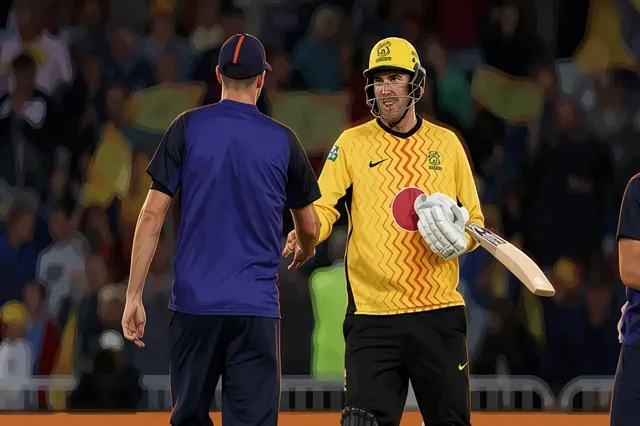

Dropped Catches Kill NZ's Pulse: How India Turned 181 Into a Win


Published 2026-10-28 · By Gaurav Bhatia (Syndicate & Match Preview Editor · Kolkata Desk)

The new ball did the talking for India’s openers, yes. But the real murder happened in the second half of the innings when New Zealand’s fielding simply fell apart. 70 for 5. That’s a death sentence in limited-overs cricket if you’re chasing, but only if you bow at the wrong angles and drop the easy stuff.
Santner and his squad thought they had it banked. They set up a web of short-to-medium fields, confident that the Indian batters would slog out of the crease into the gaps. They missed the skiddy hard length ball coming in. They missed the reverse sweep through square leg. And in doing so, they handed India the extra runs needed to push the total to a formidable 181.
The Anatomy of a Collapse
Let’s look at the tape, because the data tells a story that the commentary often glosses over. New Zealand’s boundary-percentage against spin was actually low in the first 20. The threat wasn’t power; it was the tightness. But then, the dew factor started kicking in after 8:30 PM IST, and the ball stopped swinging. Suddenly, the wrist-spinners—whether it was a left-arm unorthodox or a standard off-break—became the primary attacking weapon.
Here’s where the Impact Player gamble stings. If I were in the NZ dugout, I’d have swapped a static leg-spinner for a mobile all-rounder who could hit hard and field tight. Instead, they stuck to the safe, conventional choice. That lack of lateral thinking is a classic Kolkata-desk trap. You play the game on paper, not the game on the ground.
- Fielding Gaps: Mid-off and mid-on were two yards too deep. It invited easy singles.
- Reactivity: The slips weren’t on. When India rotated the strike to the off-side, NZ had no early containment.
- Communication: Shout-outs on catch-taking seemed absent. Two near-misses in the 15th over broke the rhythm of the chase.
Nobody in the dugout bought the excuse that it was a poor bounce. The pitch was a Ranji grind, but it held up. It was the legs that failed, not the wickets. A dropped catch at fine leg when the score was 60 for 4 changes the psychology of the innings. It tells the batsman, “We’re not taking you out. Keep rotating.”
Why the Middle-Overs Choke Keeps Happening
India’s top order is built on patience. They don’t need to hit a six in the 8th over; they need to hit a single or a two. New Zealand’s fielders, trained to field on the flanks, couldn’t adapt to the central pressure. It’s a tactical blunder that repeats itself because we stop thinking about the left-right batting pair dynamics against wrist-spin.
Imagine a pair of left-handers. The off-spinner has to bowl wide of the crease to keep it out of the back foot. That widens the angle for the cover drive. If your fielder at cover is two yards inside, you’re inviting a boundary. NZ’s positioning was too aggressive on the front foot, leaving gaps on the back foot. India exploited every single inch.
“You can’t chase 181 if you’re leaking runs in the middle overs. Discipline dies, and the innings lives.”
The final tally wasn’t just about runs; it was about momentum. When NZ slipped, the crowd noise in the stadium—a massive factor in these high-pressure matches—swallowed the bowlers. The skiddy length ball became a weapon, not a caution. India’s batters started playing with abandon, knowing the field was stretched thin.
Now, here’s the contrarian take: some pundits will say India was too lucky to win. I say they were too good. They capitalized on the smallest cracks. In this format, the small stuff changes games quickly. A misfield at mid-wicket. A slow throw. A dropped catch that shouldn’t be dropped. These aren’t stats; they’re habits. And NZ’s habits were rusty.
Looking ahead, the lesson for any team chasing 180+ is clear: stop playing the percentages that favor the fielder. Play the percentages that favor the batter. If New Zealand wants to survive in the next round, they need to fix their fielding arcs. The Impact Player slot isn’t just for a big-hitting substitute; it’s for a fielding specialist who can tighten the net. Until they see that, they’ll keep losing by five runs, ten runs, or just bad luck.
The win for India was justified, but it was ugly. It was a victory born from the opponent’s mistakes, not their brilliance. And in cricket, that’s often all it takes.
Related coverage
- Spin Winner 51 Bonus Apk Insights: WI Collapse vs India's Mid-Over Squeeze
- Abhishek's 35-Ball Century Beats Spin Winner 51 Bonus Apk Hype

Updated 2026-10-28 · Instant Rupee Deposits & 60s Withdrawals · 24/7 Support.
Access Official ZagaMusic Portal →Tech & Instant Payouts Desk · Hyderabad Desk
Tushar Thakur benchmarks mobile sports platforms, Android APK performance, and instant UPI payment rails from Hyderabad. He writes ZagaMusic's weekly verification column on spin winner 51 bonus apk.
Reader Discussion & Match Reactions (2)5.0★ Community (2 Comments)
Verified Indian cricket reader perspectives & tactical debate on zagamusic.mx
The 70 for 5 death sentence analysis is spot on. Dew factor after 8:30 PM IST completely nullified the new ball swing, forcing that reverse sweep through square leg. That Impact Player swap failure for a mobile all-rounder was pure tactical blindness; they played the paper game, not the ground reality, handing India the extra runs needed for 181.
Santner ki field settings ekdum galat gaye yaar, India ne 181 banaye aur NZ ki pulse gayi. Proper paisa vasool batting tha bhai, jab ball ki hilt ban gayi unhone reverse sweep se gap kiya. Kya dil hai match, sabke liye.